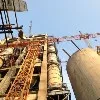
Tower cranes, as important handling equipment in the construction site and transportation and logistics fields, often carry the weight of large organizations, which also brings hidden dangers that cannot be ignored for their overturning accidents.
Generally speaking, during the operation, the ratio of the height of the tower crane to the size of the bottom support is large, and the tower's center of gravity is high, the torque is large, the starting and braking are frequent, and the impact is large, all of which are important reasons for overturning. Therefore, to prevent the tower crane from overturning, a good way is to improve it from the following three aspects:
1. Overload is strictly prohibited. In the tower crane market, it is a well-known fact that the higher the tower crane rental or purchase price, the greater the rated load. However, in the design of tower cranes, tower crane manufacturers often design a certain degree of theoretical overload to suit the actual requirements of construction operations. However, this also provides opportunities for saving money for some lucky crane companies and drivers. In fact, different types of cranes usually use the lifting moment as the main control. When the working range is increased or the weight exceeds the corresponding rated load, the overturning moment of the weight exceeds its stable torque, which may cause the tower crane to collapse. . Therefore, this is a very dangerous act.
2. Avoid oblique hanging. Under some windy conditions and complicated lifting conditions, the driver of the tower crane often adopts the method of slanting and transporting the materials to be lifted in a hurry. This is also a very dangerous act. After all, when tilting a heavy object, it will increase its overturning moment, horizontal and vertical component forces will be generated at the lifting point, and an additional overturning moment will be generated at the supporting point at the bottom of the tower crane, thereby reducing the stability factor and causing the tower crane collapse. Therefore, before lifting a heavy object, in addition to maintaining its weight not exceeding the rated load of the tower crane, a vertical hoistway should be established to avoid diagonal cranes as much as possible. It is strictly forbidden to work in winds of more than six levels, so as to avoid the dangers caused by diagonal cranes.
3. Level the foundation of the tower crane to avoid soft soil and loose soil. Because the tower crane not only bears its own gravity but also bears the pressure brought by heavy objects when lifting, the uneven foundation of the tower crane and insufficient ground endurance are also important reasons for overturning. Because, in the case of uneven foundation, too large verticality error will also cause the overturning moment of the tower crane to increase, which reduces the stability of the tower crane. In addition, the tower crane is set up on soft soil and loose soil. Due to insufficient ground endurance, especially the tower crane cannot bear the load when lifting heavy objects, it will cause the soil layer to loosen and the machine body to overturn. Choose hard and solid soil with sufficient bearing capacity, and pay attention to reinforcement.